Diane Ackerman's line "Play is our brain's favourite way of learning" guided the design of our training course Reinforcing Games as an Educational Tool for Social Change.
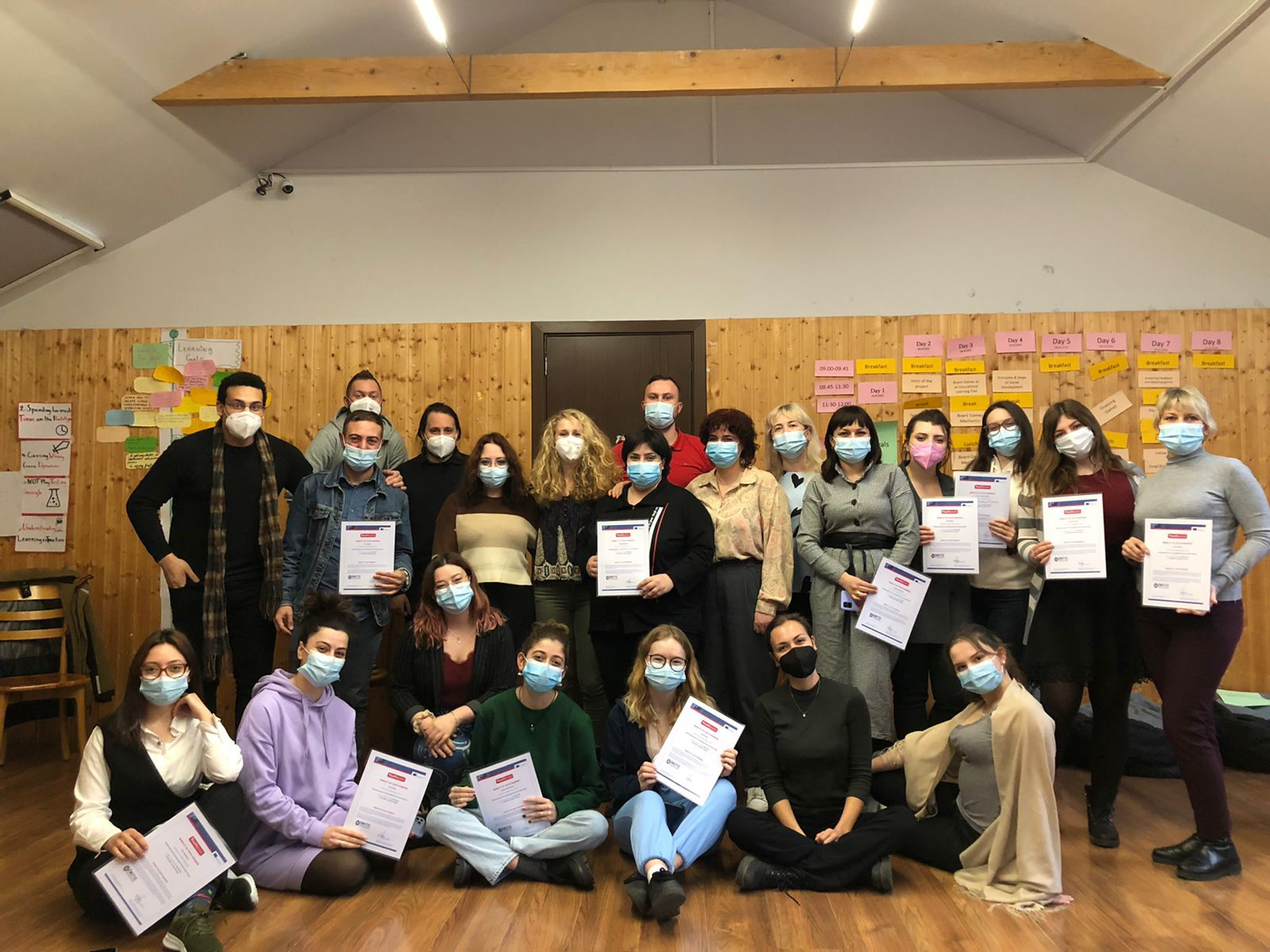
In this fully funded training, 27 youth workers from Austria (6), Armenia (3), Croatia (5), Estonia (3), Georgia (6) and Ukraine (4) spent eight days together in Rustavi, Georgia, from 4 to 11 February 2022. The course focused on the concepts, tools and techniques for designing board games that promote social values in local contexts. Games can address a wide range of social topics in an accessible way and in a short time, helping players process complex information and find creative solutions.
How the week unfolded
First daysGames as tools
Participants met and explored how board games can tackle community issues such as social exclusion and youth radicalisation, both made worse by the pandemic, comparing approaches across the six countries. Intercultural evenings with food, drink and traditions from each country were part of the learning.
Middle daysPrinciples and mechanics
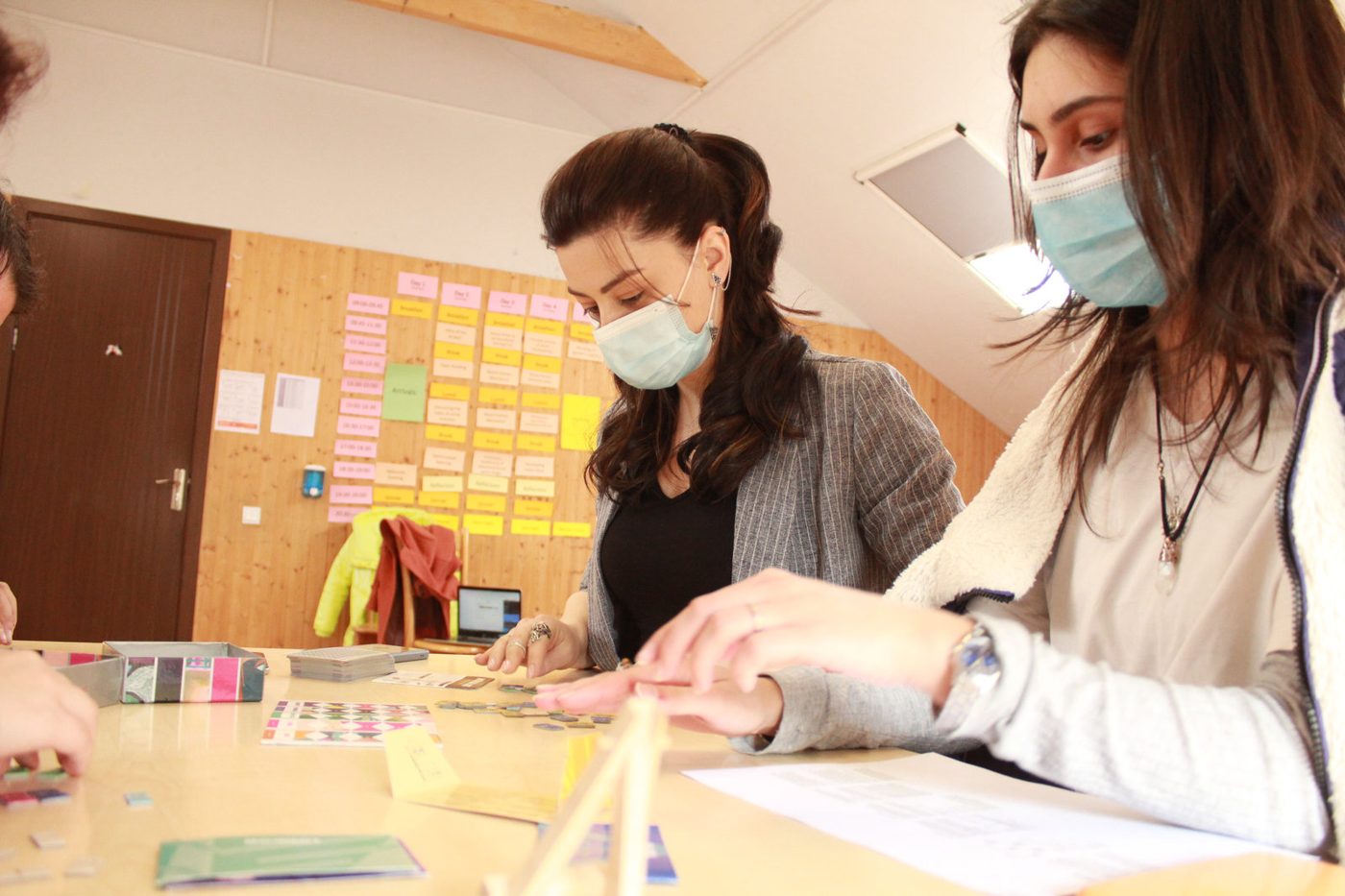
Sessions on the principles, mechanisms and techniques for designing educational social board games, reinforced by playing and testing existing games, and a barbecue night with Georgian khachapuri.
Design phaseBuilding the games
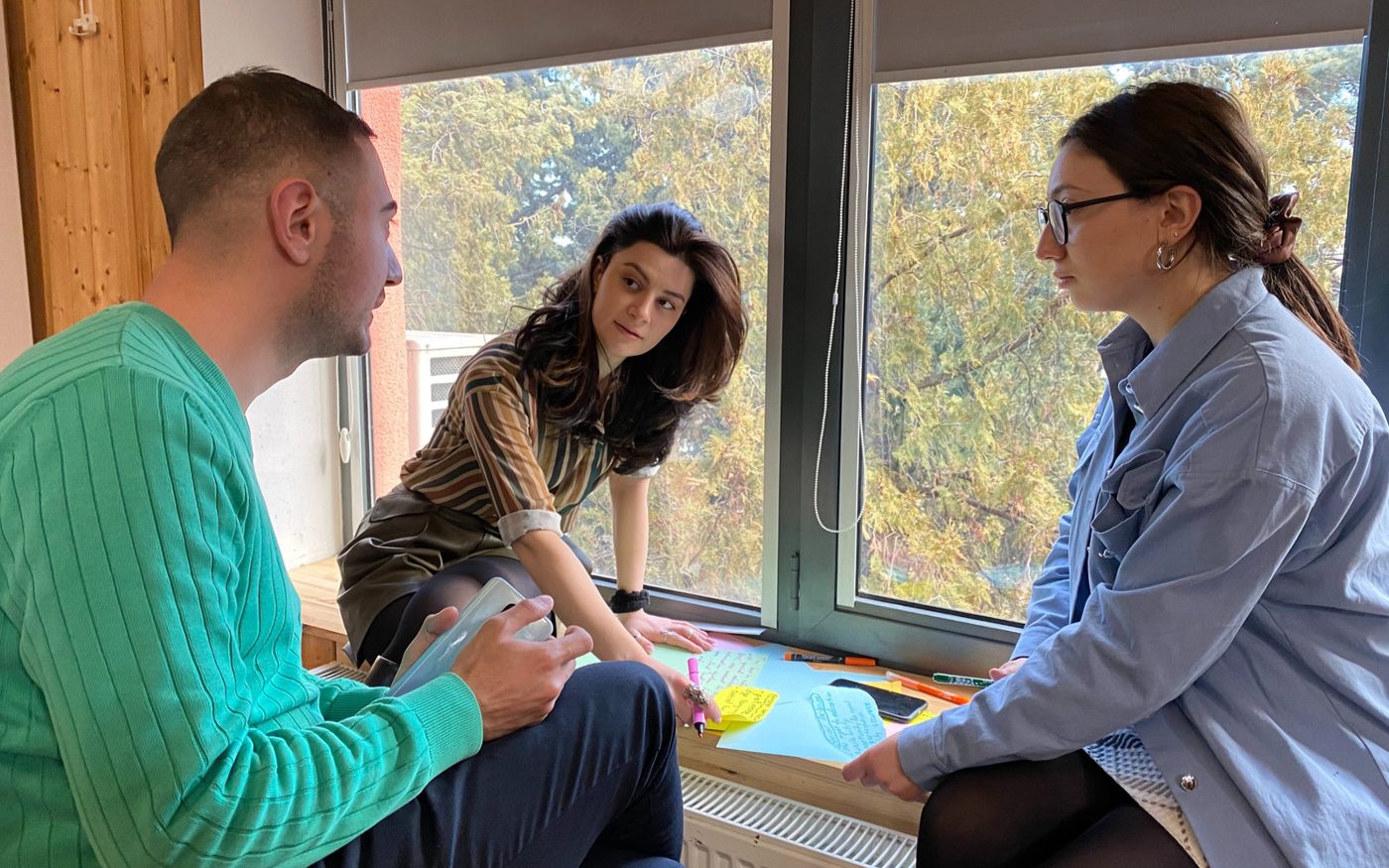
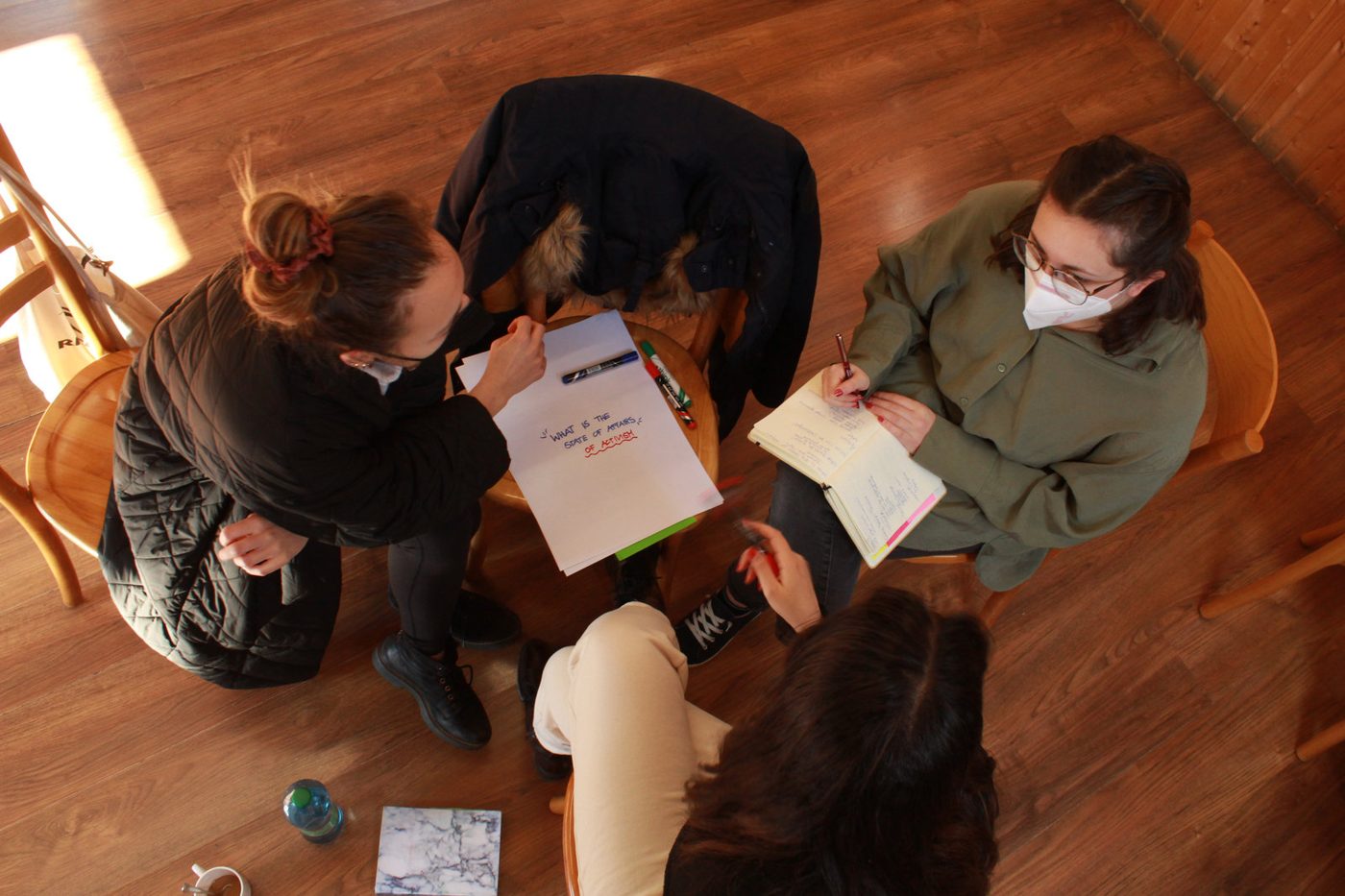
Groups of around five chose a social phenomenon, a target group and its needs and context, and started developing their own games.
Testing phasePlay, refine, repeat
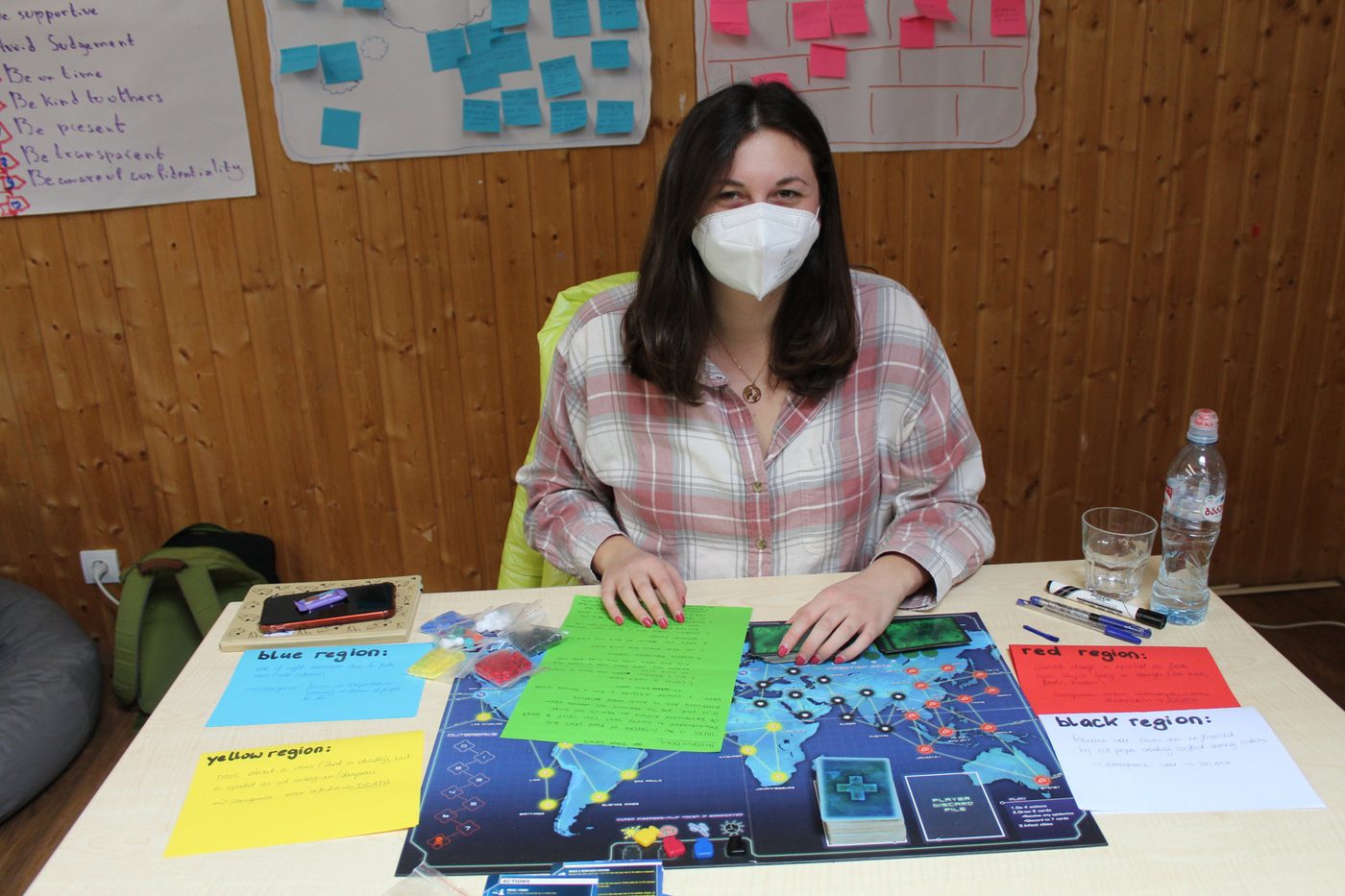
The new games were piloted, refined and played with feedback. They covered social inclusion, bullying, intercultural dialogue, democratic participation, political engagement and STEM.
ClosingLooking ahead
A review of learning outcomes, ideas for future cooperation, and local follow-up plans in each country group.
Follow-ups in five countries
Besides the 27 participants, more than 100 people were reached directly through follow-up events.
Austria32 young people
Three events introduced Erasmus+ and the project, and tested two games from the training plus a third developed afterwards. Most attendees want to design and test games themselves.
Armenia40 young people
Three events taught how to create educational games from existing table games and materials, and played the new games to collect feedback.
CroatiaRijeka and Opatija
Events with 20 attendees at NGOs and a university. One game became part of the Youth Work Ethics course at the Faculty of Humanities and Social Sciences in Rijeka, and another was entered in the 10th International Competition on Educational Games in Lisbon in October 2022.
EstoniaA trial run
The game I'MPOSSIBLE was tested with six members of a Tallinn school's student council, who found it fun, easy to understand and educational about discrimination and inclusion.
Georgia10 youth workers
A presentation on game-based learning and the training journey, followed by a round of the new game Cultural Travel, which opened discussions on culture, identity and belonging.
"I liked how the training was planned. We did not start making games right away: we had a good introduction and played existing games first, so it was not overwhelming for people who had never done anything like this before."A participant
"This was my first Erasmus+ experience. I never realised the importance of games for inclusion. The schedule was perfectly distributed and the methods were unique. I'd love to attend again."A participant
Impressions
This international project was realised with the support of the Austrian National Agency OeAD of the Erasmus+ Programme of the European Union. EMOTiC was the main coordinator and beneficiary.
Partners: Gyumri Youth Initiative Centre (Armenia), Međunarodna udruga mladih EUTOPIA (Croatia), MTÜ Shokkin Group (Estonia), Youth Association DRONI (Georgia), Center for Euroinitiatives (Ukraine).
Project reference: 2021-1-AT01-KA153-YOU-000012317
Erasmus+Training courseGamificationInclusionReports