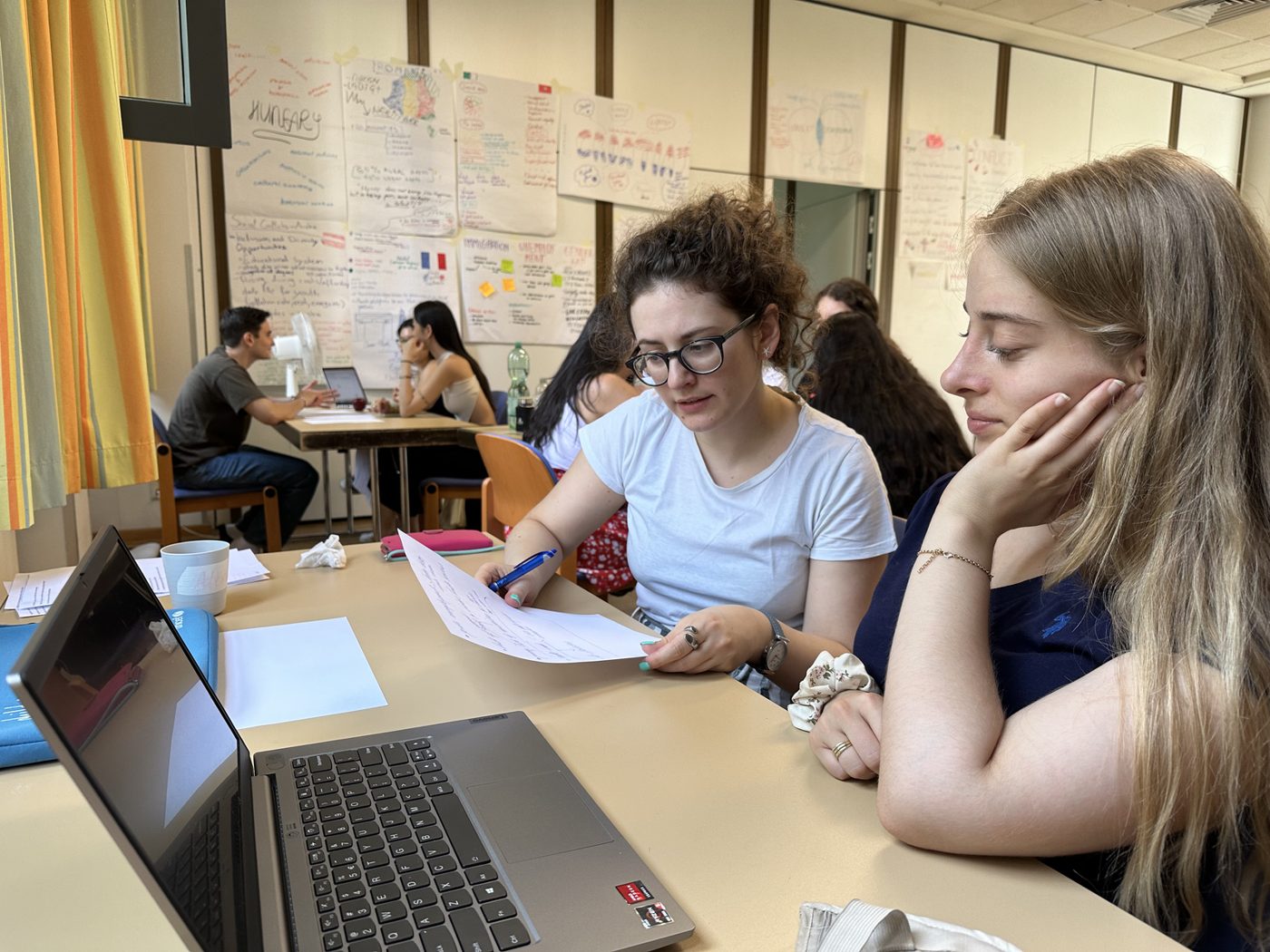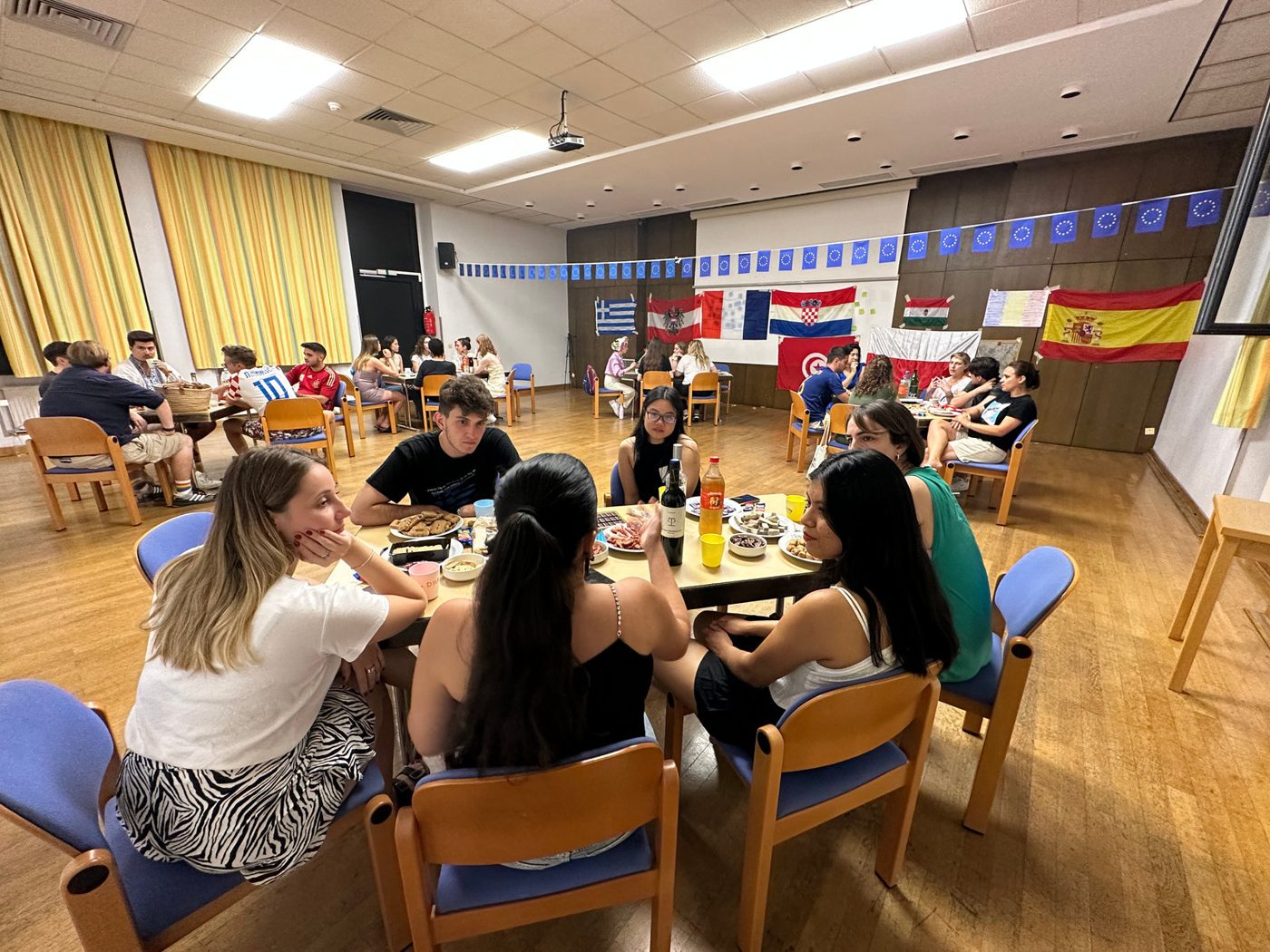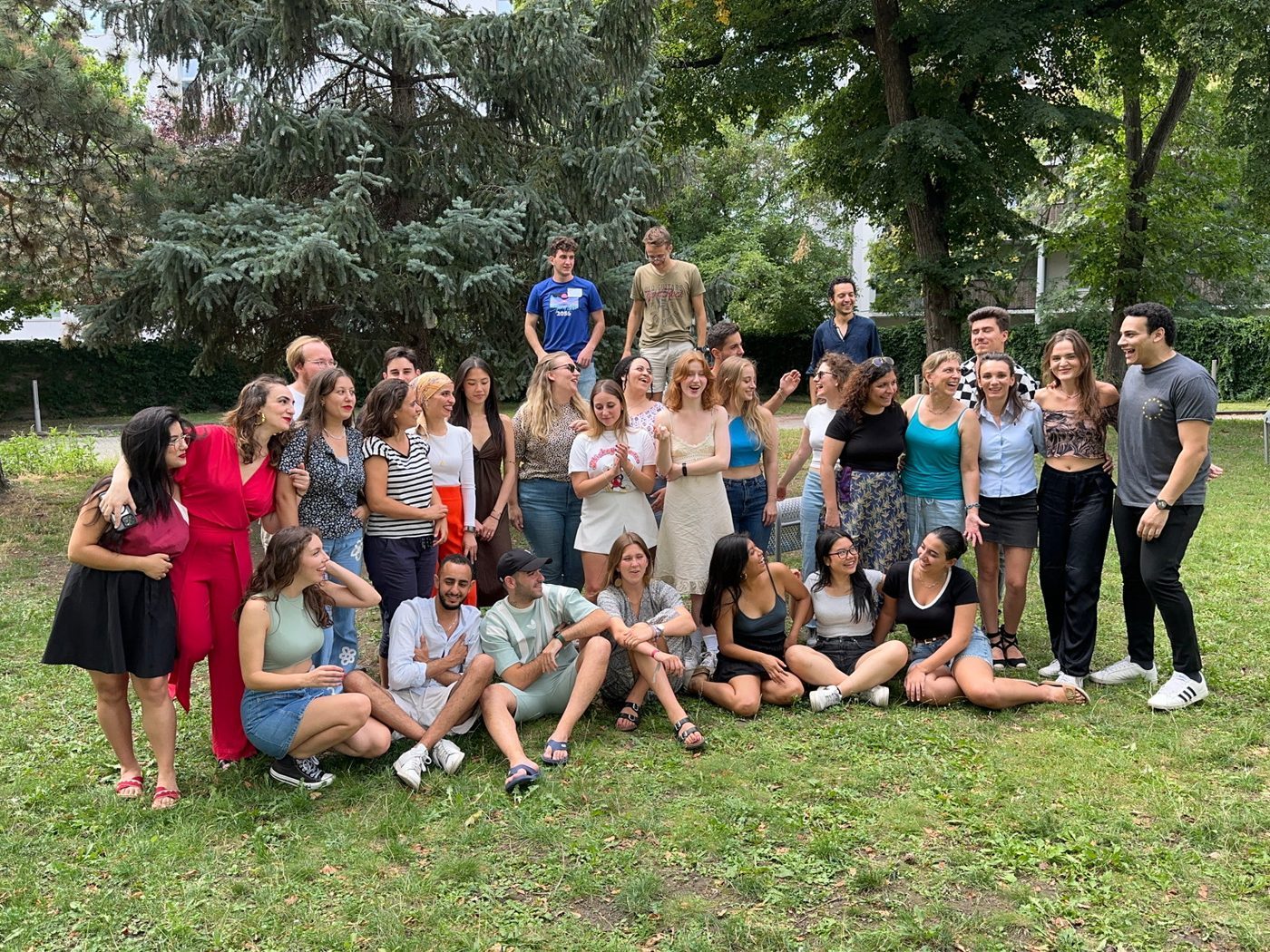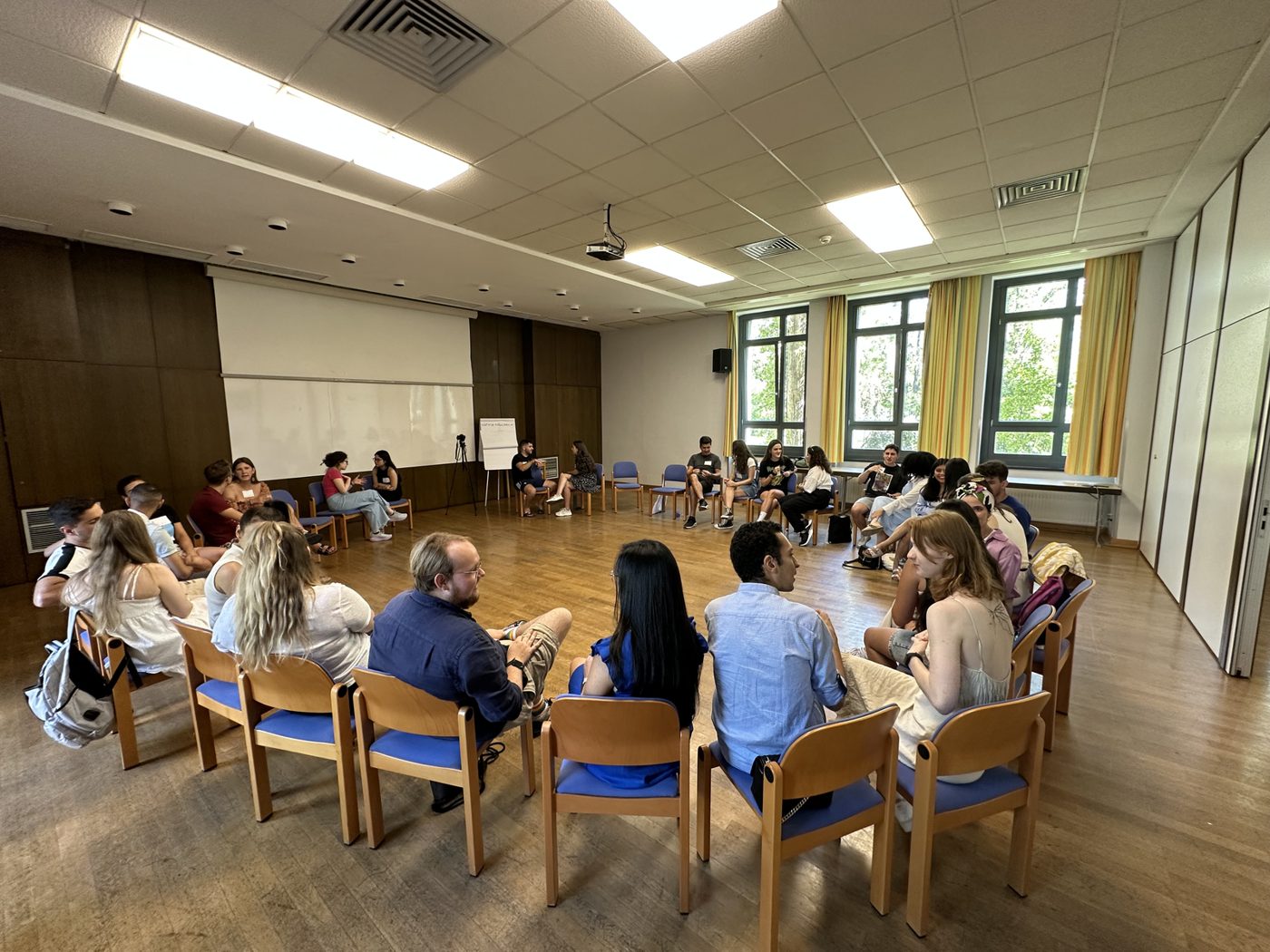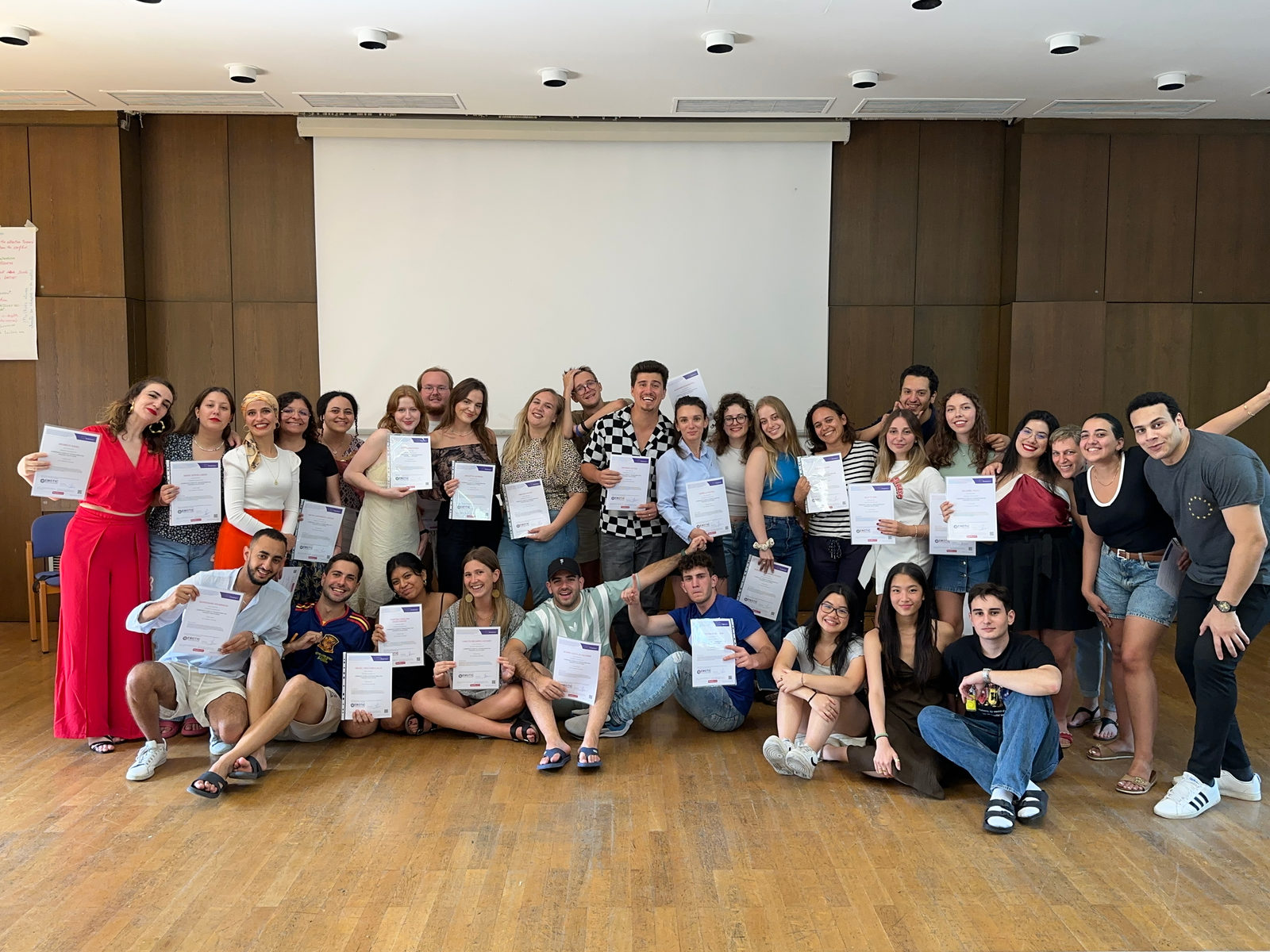
Guided by the motto that young people are the cornerstone of the present and the future, Community Conflict Transformation Through Youth Work brought 32 youth workers, mentors, leaders and facilitators to Vienna from 11 to 18 August 2023. They came from Austria, Croatia, France, Greece, Hungary, Italy, Poland, Romania and Spain, as well as Tunisia and Algeria.
This week-long capacity-building training helped youth workers become active changemakers and multipliers who can transform youth-relevant social conflicts in their communities. Participants learned how the framework of visible and invisible violence can guide them towards viable solutions, how to analyse social issues, and how to design and implement local initiatives.
From concepts to tools
The training opened with participants defining and discussing concepts such as conflict, violence, peace and solidarity, followed by theoretical input on visible and invisible violence as a way to analyse social conflicts and find constructive responses.
As the days passed, participants practised analysis models including the problem tree, actors mapping, the PIN model and the timeline. Role-plays, scenarios, simulations and educational games had a big impact, especially in showing communication as a core conflict transformation skill.
Designing their own initiatives
The last days were about putting theory into practice. Participants defined a local issue they wanted to change and, after brainstorming in country groups, drafted projects with concrete implementation plans. The EMOTiC team kept supporting the groups after the training.
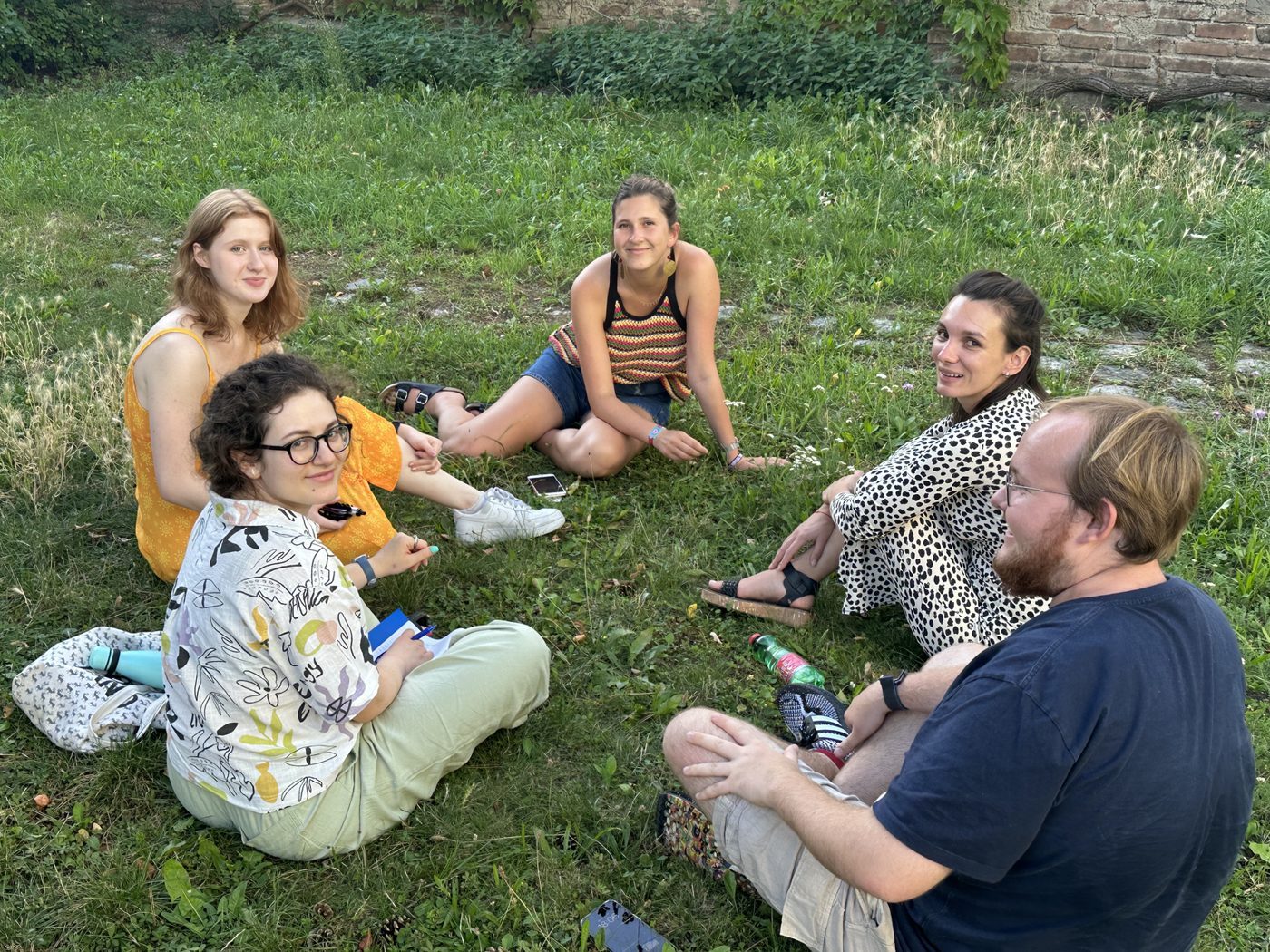
Beyond new knowledge, participants bonded strongly. The diversity of cultures, languages, genders and professional backgrounds made the training richer, in an inclusive and lively atmosphere.
Ripple effects in 10 countries
The newly designed initiatives were implemented online and offline in 10 countries, reaching more than 200 young people and youth workers, and some activities continued afterwards.
"This was my first training course but it certainly won't be my last! I met so many wonderful people from all over the world, grew as a person and returned home with more awareness of the contemporary European scene. Would I recommend this adventure to everyone? Absolutely."Adele, Italy
Because we believe interculturality is at the core of conflict transformation, we included two additional participants from Algeria and Tunisia thanks to the Anna Lindh Foundation and its ALFinMOTION programme. Their perspectives made the discussions even more constructive.